
When grey hair starts to appear, especially the first few strands, the reaction is often the same. We book an appointment with the first hairdresser available, without really questioning the type of hair color being used, simply to cover everything as quickly as possible. Or worse, we reach for a box dye at the supermarket, without taking the time to explore other options.
In this rush to “get rid of” grey hair, we often forget that there are alternatives, different results, and above all, different ways to embrace and enhance this natural hair transition. Grey hair is not necessarily something that needs to be hidden at all costs. And what if, instead, we learned how to use it to our advantage? Because yes, when properly understood and worked with the right techniques, grey hair can become a real asset. It offers a unique base for creating natural, luminous and fully customized shades, using the right hair coloring method.
Before making a choice out of habit or fear, it is essential to understand the differences between chemical hair color and plant-based hair color, their impact on the hair fiber, the results they create and everything that is now possible, especially thanks to plant-based hair coloring. In this article, we guide you step by step to help you make an informed choice, one that respects your hair, your sensitivity and your personality. So, when it comes to covering grey hair: chemical hair color or plant-based hair color?
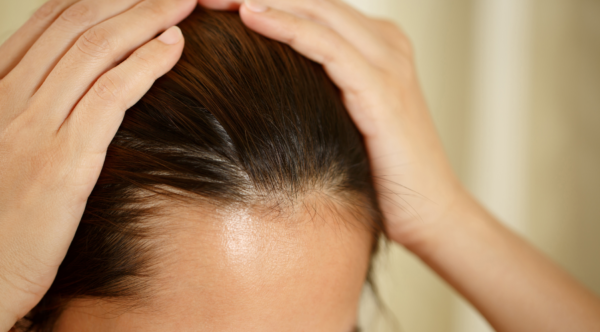
Contrary to a common belief, grey hair is not “empty” or dead hair. It is simply hair that no longer contains melanin, the natural pigment responsible for hair color. This absence of pigment significantly changes the way hair reacts to coloring products and explains why grey hair behaves differently during the coloring process. Over time, grey hair often becomes drier or rougher in texture. It may also feel thicker or more rigid, especially in areas such as the temples or along the hairline. These specific characteristics directly influence how color adheres to the hair and how the final result appears.
Color uptake on grey hair is therefore different from that of naturally pigmented hair. Depending on the coloring method used, the color may appear lighter, brighter or, on the contrary, lack depth if the technique is not properly adapted. This is why some hair colors can produce uneven or unnatural results on grey hair.
Understanding the nature of grey hair is essential to knowing how to color grey hair effectively and respectfully. The choice of coloring method, chemical or plant-based, plays a crucial role, not only in the visual result but also in the long-term health of the hair fiber.
Taking these specific characteristics into account allows for better grey hair coverage while preserving the quality, strength and beauty of the hair over time.
Chemical hair color, also known as oxidative hair color, is the most commonly used method to cover grey hair. It is often the first option people turn to, simply because it is widely known and easily accessible, both in hair salons and in supermarkets.
Chemical hair color works by altering the structure of the hair in order to fix the color inside the fiber. This process takes place in several stages. First, the hair cuticles are opened using alkaline agents. This opening allows artificial pigments to penetrate deep into the hair fiber. A chemical reaction then occurs inside the hair, creating color at its core.
This process leads to a lasting modification of the hair’s natural structure. It explains both the immediate effectiveness of chemical hair color on grey hair and its more damaging effects on the hair fiber over time. Because, quite simply, this process does not come without consequences.
Chemical hair dye for grey hair has several advantages that explain its popularity. First, it provides immediate and uniform coverage of grey hair. It is easy and reliable to use, making it accessible to almost anyone without a high risk of failure. This largely explains the success of ready-to-use box dyes available in supermarkets, it is the quick and convenient solution.
Chemical hair color also offers a wide range of shades, from very light blondes to deep, intense dark tones, allowing people to achieve a desired color quickly. Finally, the results are generally predictable in the short term, which can be reassuring when looking for an immediate change.
However, chemical hair color for grey hair comes with several significant drawbacks.
In short, chemical hair color is a fast and convenient solution, but at what cost?

In response to the limitations of chemical hair color, more and more people are turning to a different approach: plant-based hair dye. Long misunderstood or overlooked, it is now recognized as a true alternative for those who want to cover grey hair without damaging the hair fiber, while achieving more natural and harmonious results.
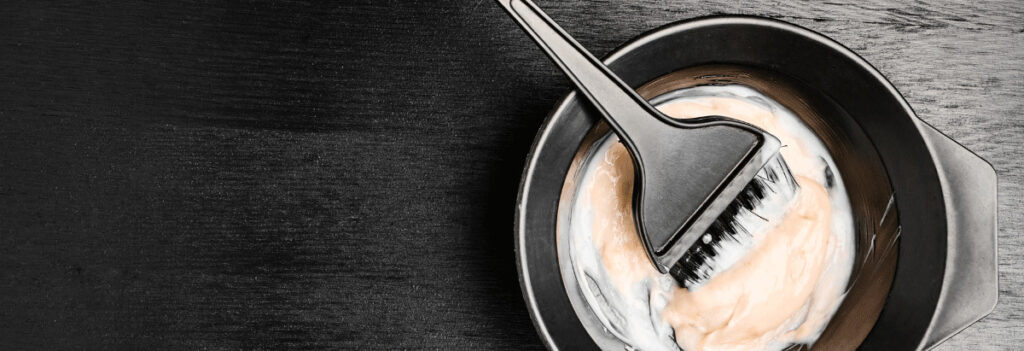
Plant-based hair color is based on the use of natural pigments. These pigments come from tinctorial (coloring) plants that are sun-dried and then finely ground into a powder, which is simply mixed with warm water before application.
Unlike chemical or oxidative hair color, plant-based hair color does not penetrate the hair fiber to alter its structure. Instead, plant pigments act on the surface of the hair, coating and enveloping the fiber. The hair is neither opened, damaged nor destroyed, it is wrapped, strengthened and protected by the color.
Because no chemical transformation takes place, the integrity of the hair is preserved while still providing visible, luminous and evolving color. Plant-based hair color for grey hair respects the hair’s natural behavior rather than forcing it to change.
One of the main advantages of natural hair dye for grey hair lies in its respect for the hair fiber. Because it does not alter the hair’s internal structure, it does not cause progressive damage or dryness. On the contrary, plant-based hair color has a strengthening and protective effect. Grey hair, which is often drier and more sensitive, regains strength, softness and shine. The hair fiber appears visibly healthier and more resilient.
The result is natural, luminous and nuanced. Rather than creating a uniform, flat color, plant-based hair color enhances the hair’s natural variations, light and depth. Grey hair is not simply “hidden,it is harmoniously integrated into the overall shade. Thanks to its surface action, plant-based hair color coats the hair, layers over the existing natural color and uses it as a base to create unique, customized tones.
Finally, plant-based hair color is particularly suitable for sensitive scalps. The absence of harsh oxidative substances significantly reduces the risk of irritation, itching or skin reactions, making it a gentle and well-tolerated option for covering grey hair.
Like any coloring method, plant-based hair color has specific characteristics that are important to understand before making a decision.
The result is generally more natural than rigid. The color does not aim to uniform everything at all costs, but rather to create a living, evolving result. This does not mean that plant-based hair color fails to cover grey hair, coverage is effective, but it does allow for greater flexibility in working with the hair’s natural variations, creating soft, natural highlights and dimension.
Plant-based hair color does not lighten the hair. Lightening requires the destruction of natural pigments, which is only possible through chemical processes. Plant-based hair color always works with the existing hair color as its base, using it to create highly personalized and nuanced shades.
Finally, depending on the percentage of grey hair and the desired result, plant-based hair color may require a double application. Professional expertise is essential to determine the right technique, the correct pigment combinations and to achieve the expected outcome.
These characteristics are not limitations in the negative sense, but rather the defining features of a different approach to hair color, one that is healthier, more respectful of the hair fiber and more harmonious.
The choice between chemical hair color and plant-based hair color depends above all on your expectations, your sensitivity and the importance you place on the long-term health of your hair. There is no single universal answer, only solutions that are more or less suited to each individual situation.
If your priority is to eliminate grey hair as quickly as possible, without considering the long-term impact, chemical (oxidative) hair color may seem like the easiest option. It delivers an immediate, highly uniform result but often at the cost of a more rigid color, visible regrowth and a gradual decline in hair quality. It is a quick response to a short-term need rather than a sustainable solution for healthy hair.
If you are looking for a luminous, nuanced and natural-looking color that respects your hair’s nature, plant-based hair color is an ideal alternative. It allows grey hair to blend harmoniously into the overall shade without freezing it in place, while preserving the hair fiber and improving hair quality over time.
If your scalp is sensitive, reactive or prone to irritation, plant-based hair color is particularly recommended. Thanks to the absence of harsh oxidative substances, it significantly reduces the risk of discomfort, itching or skin reactions while still providing effective grey hair coverage.
When grey hair appears gradually, plant-based hair color is an excellent way to support this transition gently. It allows you to play with transparency, light and nuance, without creating harsh regrowth lines. This approach is ideal for those who wish to embrace grey hair rather than fight against it.
If you are mindful of the impact that the products you use have on both your health and the environment, plant-based hair color is clearly the preferred option. Made from tinctorial plants and natural pigments, it limits exposure to potentially irritating or controversial chemical substances.
Unlike oxidative hair colors, which generate polluting residues released into water and soil, plant-based hair color follows a more environmentally responsible approach. It is a coherent choice for those who want to care for their hair while adopting a more sustainable vision of beauty.
Yes, plant-based hair coloring can effectively cover grey hair, provided that the technique is adapted to the percentage of grey hair and the desired result. Contrary to common beliefs, it does not simply “camouflage” grey hair. Plant pigments coat the hair fiber and build color through layering, fixing themselves on the surface of the hair. The result is a natural, luminous and long-lasting color. While the finish is generally more nuanced than with chemical hair dye, the coverage is real and effective when the method is properly mastered.
Yes, chemical hair coloring can damage grey hair over time. Chemical (oxidative) hair dye works by altering the internal structure of the hair to allow pigments to penetrate. On grey hair, which is already drier and more fragile, this process can increase dryness, dullness and breakage in the long run. This is one of the main reasons why many people today turn to gentler alternatives such as plant-based hair color.
The most sustainable solution is the one that preserves hair health over time. Durability should not be measured only by how long the color lasts, but also by the condition of the hair in the long term. Chemical hair dye delivers an immediate and uniform result, but requires frequent touch-ups and progressively weakens the hair fiber. Plant-based hair coloring, on the other hand, acts like a treatment: with each application, the hair becomes stronger, shinier and healthier, allowing for a smoother and more sustainable transition to grey hair—for both the hair and the scalp.
Yes, it is absolutely possible to transition from chemical hair dye to plant-based hair coloring, but this transition should be supported by a professional. Depending on your hair history, a detox or adjustment phase may be necessary to remove chemical residues and allow plant pigments to fully express themselves. A personalized salon diagnosis is essential to define the right strategy and achieve a harmonious result.
Not all plant-based hair colors are the same. Pigment quality, purity and the expertise behind their formulation play a crucial role in the final result. Hairborist is recognized as one of the pioneers of plant-based hair coloring in Europe. With 24 different plant pigments, Hairborist offers the widest pigment range on the market, allowing for exceptional precision and truly bespoke shades. This unique pigment richness makes it possible to adapt color formulas to every hair type, every percentage of grey hair and every skin tone.
Choosing a Hairborist partner salon means benefiting from a fully personalized and professional plant-based coloring approach. Since 1995, Hairborist has been developing formulas made exclusively from high-quality plant pigments, mixed simply with hot water, without chemical compromise.
Beyond color, the Hairborist experience is rooted in well-being, care and respect for the hair and scalp, turning hair coloring into a moment of relaxation and holistic care. It is a guarantee of quality, reliability and expertise for anyone wishing to approach grey hair differently.
There is no single “best” universal solution for covering grey hair. The choice between chemical hair dye and plant-based hair coloring depends on your expectations, your hair type and your sensitivity. Taking the time to understand these differences allows you to make a choice that is more respectful of your hair and often more sustainable in the long term.


Loading quiz...